
Nicole Griffin
Boudoir Photography with Detail and Depth
Written by: Jacqueline Tobin | May 2026
Nicole Griffin Photography is based in Washington, D.C.
Website: https://nicolegriffinphotography.com Email: [email protected] Instagram: @nicolegphotography_dc
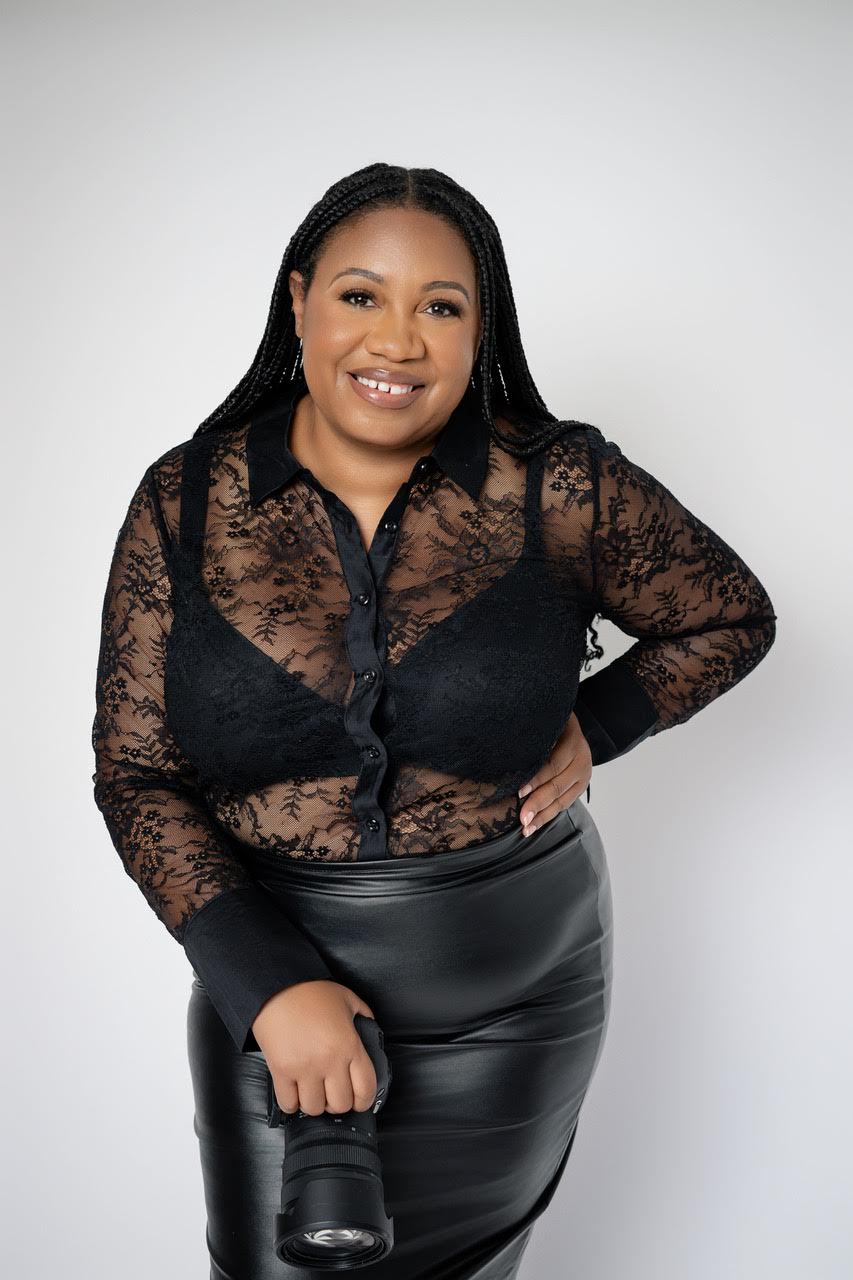
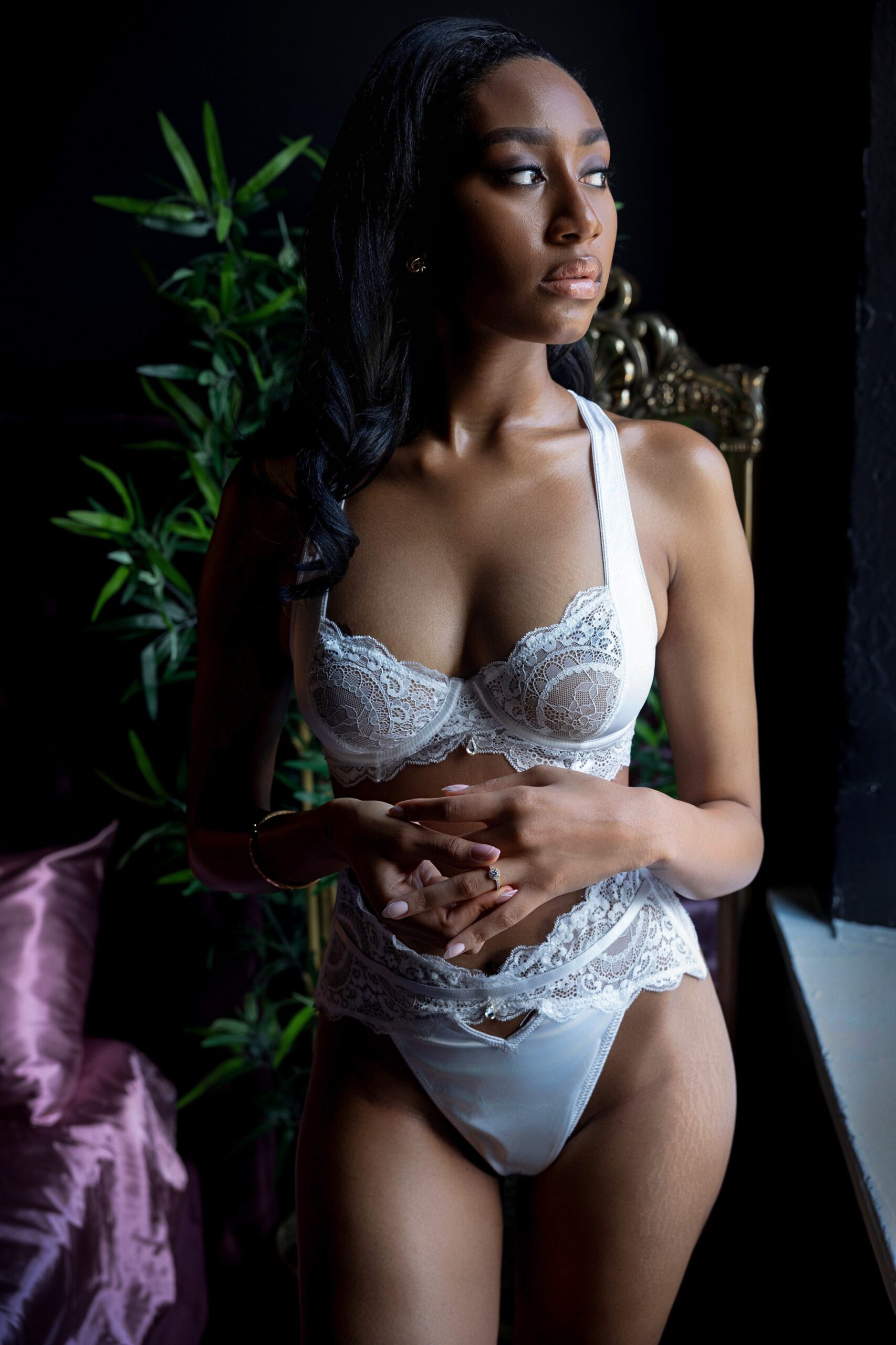
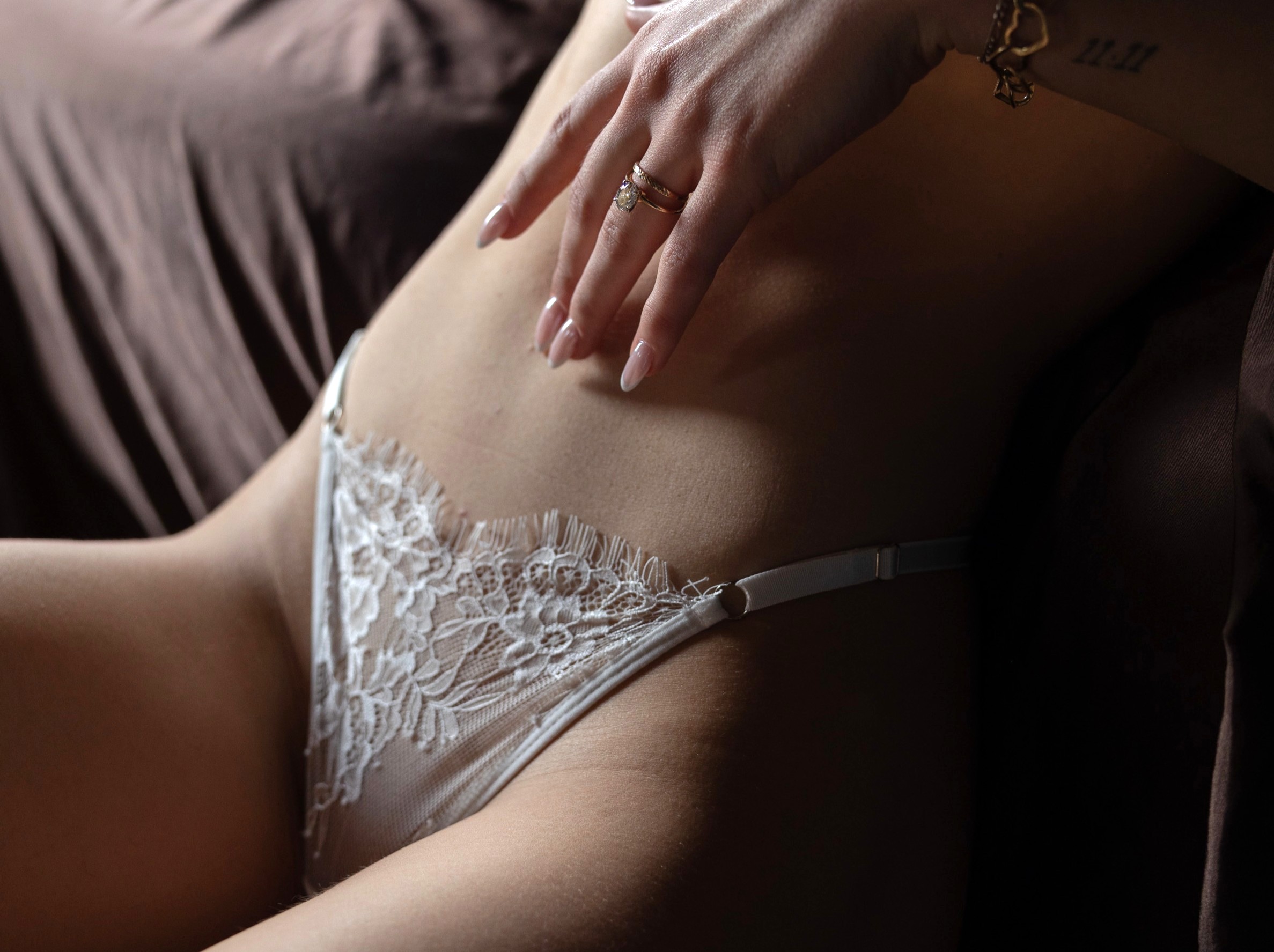
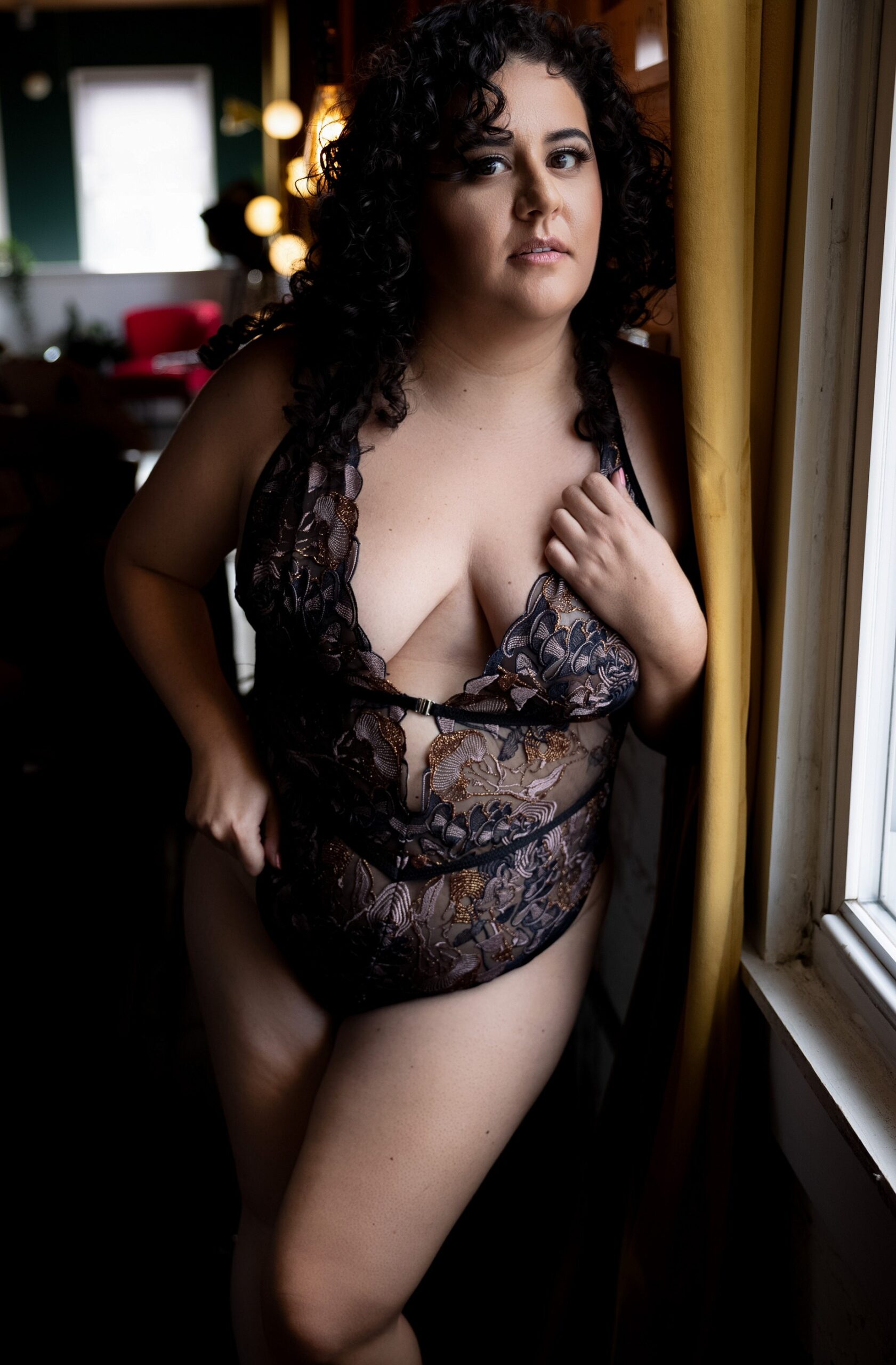
Just one look at Nicole Griffin’s boudoir portfolio had a lasting impact on me. I was immediately struck by the space she creates between intimacy and atmosphere in every image. Her work blends the dark and moody with the sensual and cinematic, while each photo has narrative and depth that never feels contrived. She also excels at isolating a woman’s most alluring body details: the curve of a back, the line of a collarbone, fingers above lace…and every frame feels intentional, connected by shadow, texture, and mood. Her work quietly draws viewers in, revealing sensuality, focus, and an instinctive sense for the scene.
Where did it all begin? “In high school, I picked photography as an elective class,” she explains, “but I really didn’t have any interest in it at the time. My parents had an old Pentax camera, so I knew I could learn the basics with it if I wanted to, and eventually I did. Ultimately, she discovered that being in the darkroom and developing film was an amazing experience. Years later, after moving to Guam in 2015, she bought her first DSLR camera. “I wanted to share all the island’s stunning sights with my family back home in the D.C. area. From there, I photographed everything from athletes to zebras.”
Just one look at Nicole Griffin’s boudoir portfolio had a lasting impact on me. I was immediately struck by the space she creates between intimacy and atmosphere in every image. Her work blends the dark and moody with the sensual and cinematic, while each photo has narrative and depth that never feels contrived. She also excels at isolating a woman’s most alluring body details: the curve of a back, the line of a collarbone, fingers above lace…and every frame feels intentional, connected by shadow, texture, and mood. Her work quietly draws viewers in, revealing sensuality, focus, and an instinctive sense for the scene.
Where did it all begin? “In high school, I picked photography as an elective class,” she explains, “but I really didn’t have any interest in it at the time. My parents had an old Pentax camera, so I knew I could learn the basics with it if I wanted to, and eventually I did. Ultimately, she discovered that being in the darkroom and developing film was an amazing experience. Years later, after moving to Guam in 2015, she bought her first DSLR camera. “I wanted to share all the island’s stunning sights with my family back home in the D.C. area. From there, I photographed everything from athletes to zebras.”
The Journey
Of course, no one’s path is straight. After that period, the idea of doing boudoir photography began to take shape in the photographer’s life during one of her darkest chapters.
During the pandemic, Griffin found herself isolated and emotionally overwhelmed after getting out of a painful relationship. “My ex dissected everything from my appearance to the way I loaded the dishwasher. In the silence of lockdown, those comments became impossible to escape. And because we were already isolated, his voice was the only voice I had in my head,” she says. “I heard it over and over, and that sent me into a depressive spiral.”
With therapy, she began rebuilding her self-worth, but an unexpected turning point came one day while she was scrolling online. She stumbled across the work of a boudoir photographer, which, as she describes it, stopped her in her tracks. “They were sensual, intimate, and emotionally charged in a way that felt entirely different from the overly polished glamour photography I had seen before.”
Griffin recalls that at first she had dismissed the genre. “The idea of boudoir scared me. Photographing half-naked people felt like way too much.” Eventually, curiosity won out. Following her discovery, she attended a boudoir workshop during the Wedding & Portrait Photographers International Conference (WPPI) in Vegas. It was there that she came to recognize, and then embrace, the emotional power of boudoir.
“Making a woman feel and look beautiful in my camera was such a great feeling,” she says. “And frankly, it started to give me a bit of a confidence boost as well.”
Griffin rented a hotel suite, inviting six friends to pose in raw, vulnerable practice sessions throughout a weekend. She delved into experimenting with posing, lighting, and connection, determined to discover something real. By the weekend’s end, a breakthrough: one woman wept at her images because, as Griffin remembers, “it had been so long since she recognized her own beauty.” Griffin realized in that moment, “This is what I’m meant to do.” She’s never looked back.
Of course, no one’s path is straight. After that period, the idea of doing boudoir photography began to take shape in the photographer’s life during one of her darkest chapters.
During the pandemic, Griffin found herself isolated and emotionally overwhelmed after getting out of a painful relationship. “My ex dissected everything from my appearance to the way I loaded the dishwasher. In the silence of lockdown, those comments became impossible to escape. And because we were already isolated, his voice was the only voice I had in my head,” she says. “I heard it over and over, and that sent me into a depressive spiral.”
With therapy, she began rebuilding her self-worth, but an unexpected turning point came one day while she was scrolling online. She stumbled across the work of a boudoir photographer, which, as she describes it, stopped her in her tracks. “They were sensual, intimate, and emotionally charged in a way that felt entirely different from the overly polished glamour photography I had seen before.”
Griffin recalls that at first she had dismissed the genre. “The idea of boudoir scared me. Photographing half-naked people felt like way too much.” Eventually, curiosity won out. Following her discovery, she attended a boudoir workshop during the Wedding & Portrait Photographers International Conference (WPPI) in Vegas. It was there that she came to recognize, and then embrace, the emotional power of boudoir.
“Making a woman feel and look beautiful in my camera was such a great feeling,” she says. “And frankly, it started to give me a bit of a confidence boost as well.”
Griffin rented a hotel suite, inviting six friends to pose in raw, vulnerable practice sessions throughout a weekend. She delved into experimenting with posing, lighting, and connection, determined to discover something real. By the weekend’s end, a breakthrough: one woman wept at her images because, as Griffin remembers, “it had been so long since she recognized her own beauty.” Griffin realized in that moment, “This is what I’m meant to do.” She’s never looked back.
Style, Voice, and Emotional Transformation

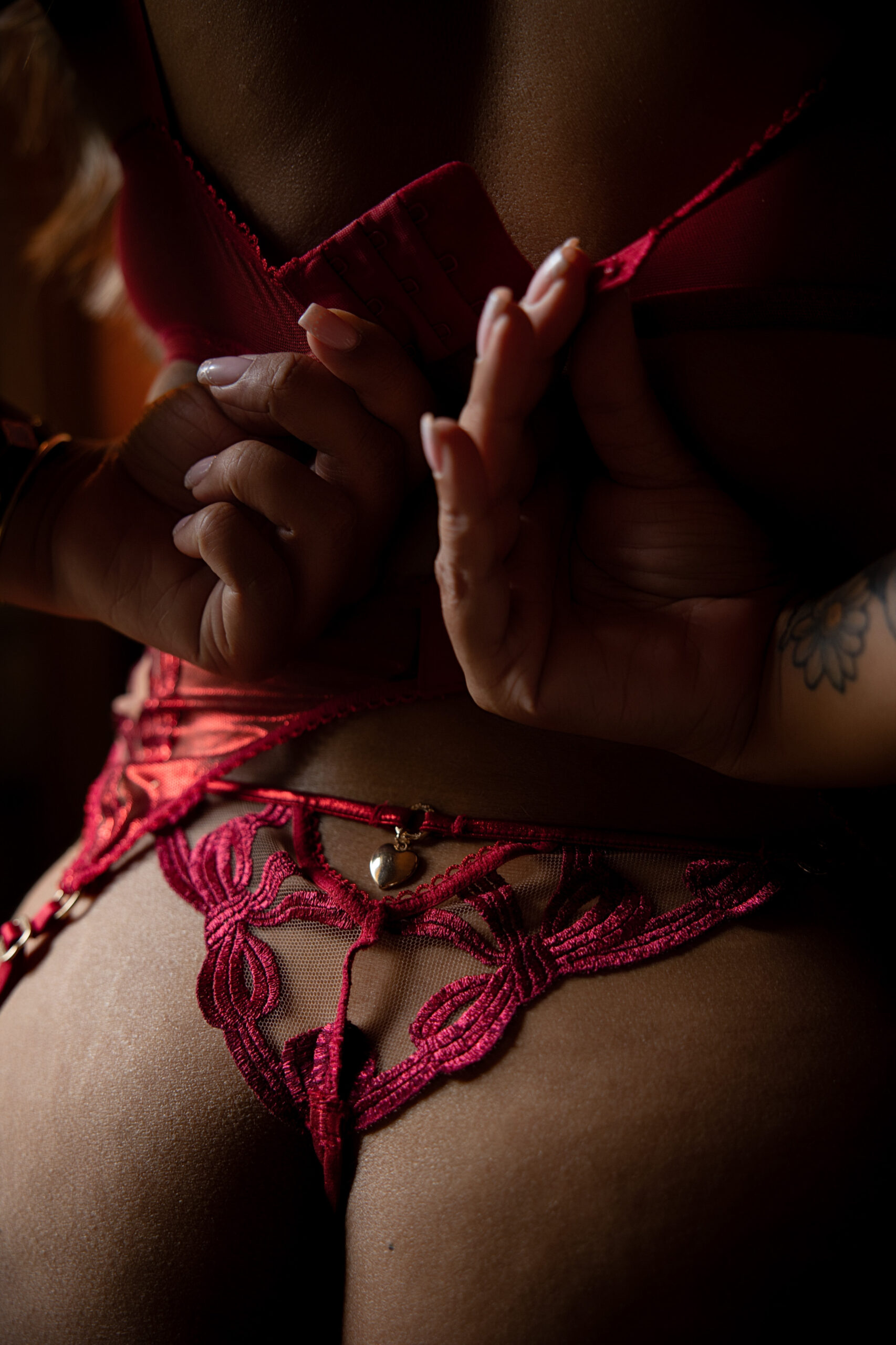
Today, Griffin’s work is unmistakably her own. While her images lean dark and moody, they remain cinematic without feeling overly staged and sensual without sacrificing emotional depth. And it’s all about the details: the curve of a hip, the placement of hands, the tension in a shoulder, the softness in a glance. Beneath that aesthetic lies something far more intentional.
“I really love capturing the details of my clients,” she explains. “I feel like it helps them reframe the stories that they say about their bodies.”
Nearly every client who walks into her studio arrives carrying some version of self-doubt. Griffin hears the same insecurities repeatedly, especially around aging, weight, scars, motherhood, or body image. Instead of hiding those areas, she photographs them thoughtfully. This approach gives clients an opportunity to see themselves through a different lens.
“Recently I had a client who told me she could still see the areas she wasn’t fond of,” Griffin says, “but now she sees them as beautiful, and it’s starting to heal how she feels about that body part.”
That emotional transformation has become the foundation of her work. She knows better than anyone what self-doubt can do. Early on in her boudoir photography career, she battled imposter syndrome, constantly questioning her aesthetic and comparing herself to other photographers. More importantly, she realized she was unintentionally projecting her own insecurities onto clients. “The moment I stopped doing that,” she says, “the right clients started finding me.”
That clarity reshaped the type of work she wanted to create well into the future. “When I first started, I wanted to work exclusively with Black women,” she explains. “A friend told me I was pigeonholing myself, but that drive didn’t come out of nowhere. It came from knowing exactly what Black women are told about our bodies. We’re over-sexualized by society and then told we can’t be sexual because we have to be someone’s mother, someone’s daughter, someone’s church member. We’ve already got the hips and everything else. I’m just like, can you just let us live? Then I started to do research, and I saw that similar thoughts and projections were being put on divorced women, woman over 40, women with normal to plus size bodies, and women of all races. I realized then that the work I want to create is perfect for women of all walks of life, not just women that check one box.”
That inclusivity is central to Griffin’s philosophy, and one of the things she believes is still missing across much of the boudoir industry. She points to the lack of diversity often seen in advertising, award galleries, and published work, where a narrow standard of beauty continues to dominate.
“To me, sexy is a feeling,” she says. “It is not a monolith, and it has never belonged exclusively to one body type, one age, one shade, one size.” Her sessions are designed to reinforce that belief long before the camera ever comes out.
Today, Griffin’s work is unmistakably her own. While her images lean dark and moody, they remain cinematic without feeling overly staged and sensual without sacrificing emotional depth. And it’s all about the details: the curve of a hip, the placement of hands, the tension in a shoulder, the softness in a glance. Beneath that aesthetic lies something far more intentional.
“I really love capturing the details of my clients,” she explains. “I feel like it helps them reframe the stories that they say about their bodies.”
Nearly every client who walks into her studio arrives carrying some version of self-doubt. Griffin hears the same insecurities repeatedly, especially around aging, weight, scars, motherhood, or body image. Instead of hiding those areas, she photographs them thoughtfully. This approach gives clients an opportunity to see themselves through a different lens.
“Recently I had a client who told me she could still see the areas she wasn’t fond of,” Griffin says, “but now she sees them as beautiful, and it’s starting to heal how she feels about that body part.”
That emotional transformation has become the foundation of her work. She knows better than anyone what self-doubt can do. Early on in her boudoir photography career, she battled imposter syndrome, constantly questioning her aesthetic and comparing herself to other photographers. More importantly, she realized she was unintentionally projecting her own insecurities onto clients. “The moment I stopped doing that,” she says, “the right clients started finding me.”
That clarity reshaped the type of work she wanted to create well into the future. “When I first started, I wanted to work exclusively with Black women,” she explains. “A friend told me I was pigeonholing myself, but that drive didn’t come out of nowhere. It came from knowing exactly what Black women are told about our bodies. We’re over-sexualized by society and then told we can’t be sexual because we have to be someone’s mother, someone’s daughter, someone’s church member. We’ve already got the hips and everything else. I’m just like, can you just let us live? Then I started to do research, and I saw that similar thoughts and projections were being put on divorced women, woman over 40, women with normal to plus size bodies, and women of all races. I realized then that the work I want to create is perfect for women of all walks of life, not just women that check one box.”
That inclusivity is central to Griffin’s philosophy, and one of the things she believes is still missing across much of the boudoir industry. She points to the lack of diversity often seen in advertising, award galleries, and published work, where a narrow standard of beauty continues to dominate.
“To me, sexy is a feeling,” she says. “It is not a monolith, and it has never belonged exclusively to one body type, one age, one shade, one size.” Her sessions are designed to reinforce that belief long before the camera ever comes out.
Nuts and Bolts: From Consultation to Session Day
Every one of Griffin’s clients begins their experience with a planning consultation. During this conversation, she discusses wardrobe, fears, expectations, and goals for the session. She also assigns what she calls “mirror work.” In this exercise, clients stand naked in front of a mirror and say five positive things about their body out loud every day leading up to the shoot.
“If it feels cringey, if you don’t fully believe it yet, keep going anyway,” she tells clients.
That exercise, she explains, is less about instant confidence and more about interrupting years of negative self-talk. Griffin wants clients to arrive at the studio already practicing kindness toward themselves.
By session day, the experience feels less like walking into a photo shoot and more like stepping into an environment carefully built around trust. “There is music playing, usually ‘90s, R&B, hip-hop, or pop, hair and makeup, constant conversation, and plenty of humor,” she describes. She demonstrates poses, provides real-time feedback, and adjusts her energy to each client’s emotional needs.
“I’m not standing behind the lens in silence watching her figure out what to do with her body,” she says. “I’m talking the whole time.”
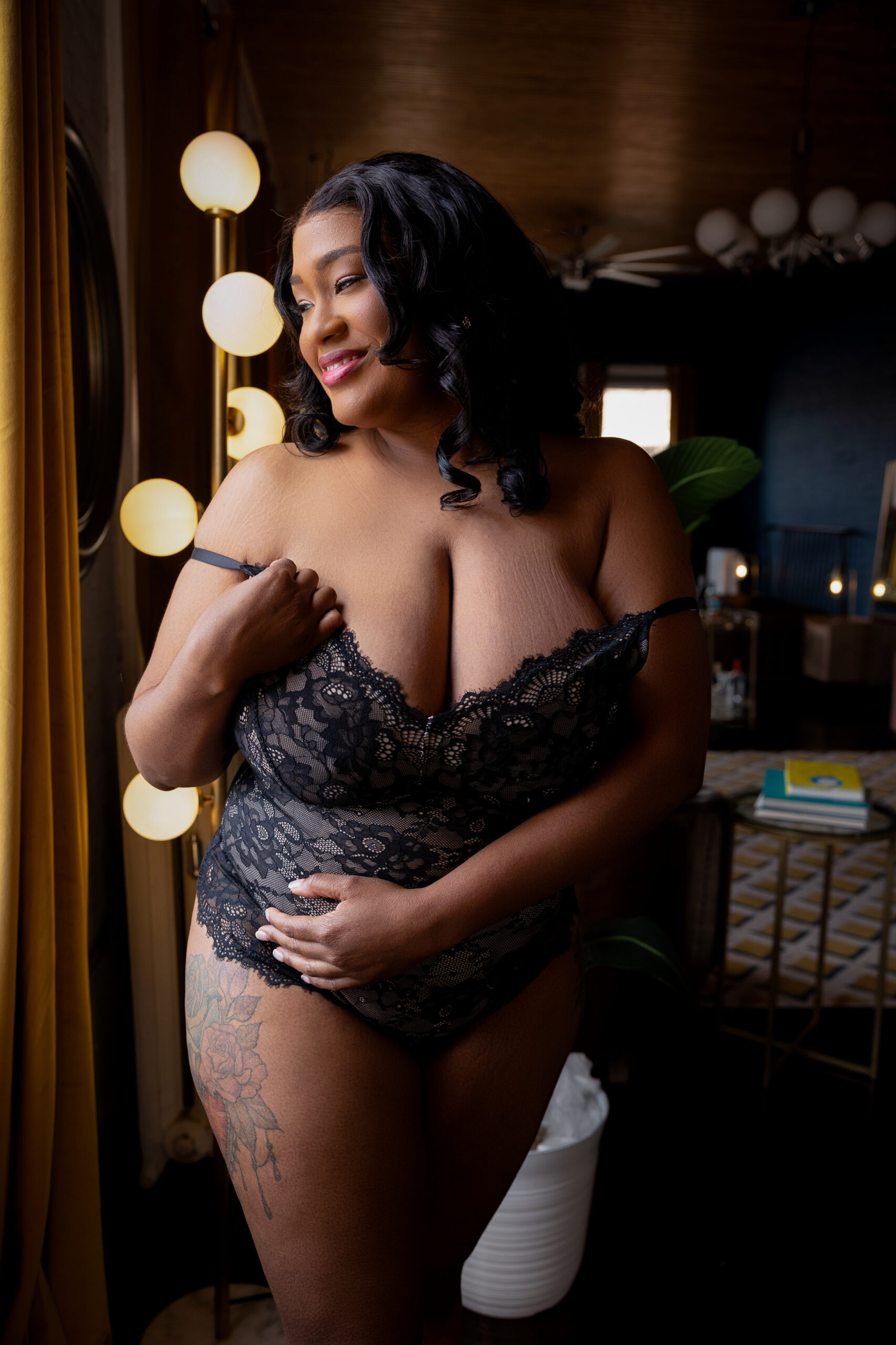
Every one of Griffin’s clients begins their experience with a planning consultation. During this conversation, she discusses wardrobe, fears, expectations, and goals for the session. She also assigns what she calls “mirror work.” In this exercise, clients stand naked in front of a mirror and say five positive things about their body out loud every day leading up to the shoot.
“If it feels cringey, if you don’t fully believe it yet, keep going anyway,” she tells clients.
That exercise, she explains, is less about instant confidence and more about interrupting years of negative self-talk. Griffin wants clients to arrive at the studio already practicing kindness toward themselves.
By session day, the experience feels less like walking into a photo shoot and more like stepping into an environment carefully built around trust. “There is music playing, usually ‘90s, R&B, hip-hop, or pop, hair and makeup, constant conversation, and plenty of humor,” she describes. She demonstrates poses, provides real-time feedback, and adjusts her energy to each client’s emotional needs.
“I’m not standing behind the lens in silence watching her figure out what to do with her body,” she says. “I’m talking the whole time.”
Up Close and Personal: The Client Base
For Griffin, confidence is never a prerequisite.
“I’ve had clients tell me another photographer told them they weren’t ready because they didn’t have enough self-confidence yet,” she says. “That broke my heart.”
Instead, she sees confidence as something developed during the experience itself, not before it.
Some of the most meaningful moments in Griffin’s career have come from clients who initially struggled the most to see themselves as worthy of being photographed. One client that remains close to her heart is a woman who had undergone a double mastectomy and 13 surgeries over
three and a half years.
After the session, the client quietly asked Griffin whether her body had made her uncomfortable.
“My heart broke in that moment,” Griffin says. “That she felt like her body, which shows the story of her survival, brought her so much pain.”
When the client later saw the photographs, she cried.
“She told me until she saw the images, she would not have thought about liking her body,” Griffin recalls. “That is why I do this work, not the pretty pictures, but for that.”
Griffin’s work is deeply emotional, but she is equally intentional about the business side of her studio. Earlier in her career, she worked for a nationwide boudoir company that operated at high volume. She photographed as many as eight clients a day in rapid succession.
“That never felt right to me,” she says. “I want to actually know the woman I’m photographing.”
Now, she structures her business around connection, building a luxury experience centered on communication, preparation, and emotional support. She believes clients remember how they felt during the process just as much as the final images.
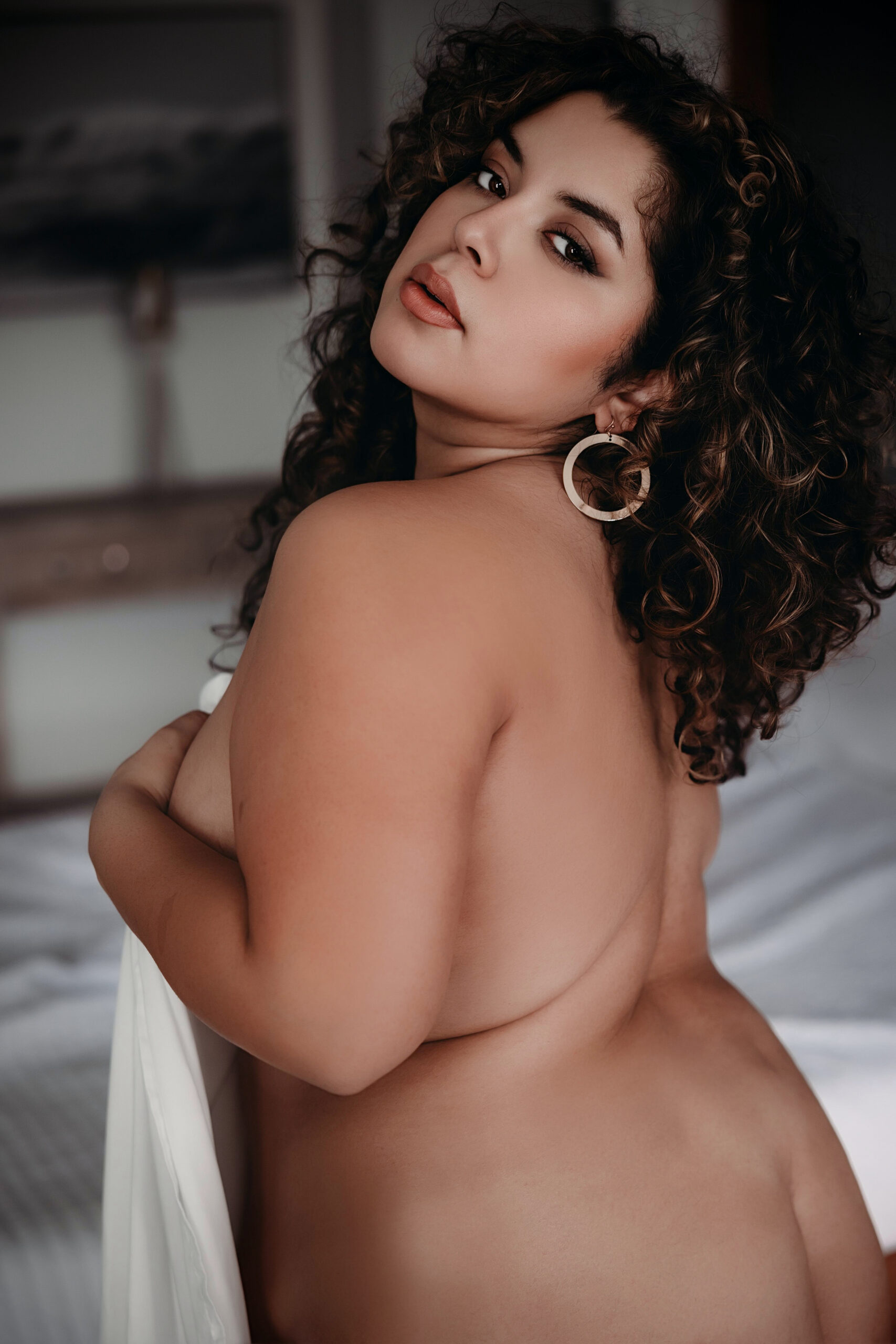
For Griffin, confidence is never a prerequisite.
“I’ve had clients tell me another photographer told them they weren’t ready because they didn’t have enough self-confidence yet,” she says. “That broke my heart.”
Instead, she sees confidence as something developed during the experience itself, not before it.
Some of the most meaningful moments in Griffin’s career have come from clients who initially struggled the most to see themselves as worthy of being photographed. One client that remains close to her heart is a woman who had undergone a double mastectomy and 13 surgeries over
three and a half years.
After the session, the client quietly asked Griffin whether her body had made her uncomfortable.
“My heart broke in that moment,” Griffin says. “That she felt like her body, which shows the story of her survival, brought her so much pain.”
When the client later saw the photographs, she cried.
“She told me until she saw the images, she would not have thought about liking her body,” Griffin recalls. “That is why I do this work, not the pretty pictures, but for that.”
Griffin’s work is deeply emotional, but she is equally intentional about the business side of her studio. Earlier in her career, she worked for a nationwide boudoir company that operated at high volume. She photographed as many as eight clients a day in rapid succession.
“That never felt right to me,” she says. “I want to actually know the woman I’m photographing.”
Now, she structures her business around connection, building a luxury experience centered on communication, preparation, and emotional support. She believes clients remember how they felt during the process just as much as the final images.
Words of Wisdom
For photographers interested in entering boudoir, Griffin’s advice has little to do with gear.
“Learn how to direct a human being before you invest in anything else,” she says.
To her, boudoir is not simply portraiture in lingerie. It is emotional work. It requires intuition, communication, vulnerability, and the ability to create safety in real time.
“Your job is to hold space,” she says. “The human skills matter more than the technical ones.”
The AIBP Connection
That philosophy of unearthing the human side of the business has helped define Griffin’s career, earning her recognition from the Association of International Boudoir Photographers (AIBP), including honors in Best of Boudoir 2025. But accolades, she insists, are secondary to irreplaceable moments happening quietly inside the studio every week, including:
- A client crying three frames into a session because she has never seen herself that way before.
- A woman over 40 deciding she no longer wants to disappear.
- A cancer survivor realizing her scars do not make her less beautiful.
“At the end of the day,” Griffin says, “I want women to understand that confidence is not reserved for people who already love every part of themselves. Sometimes confidence begins with allowing yourself to be seen exactly as you are.”
Final Thoughts
Griffin continues, “I will give up sleep, time, and money to share that moment with more clients. To me, boudoir photography is more than just making sure someone walks away with beautiful or sexy images of themselves; it's about how they see themselves. And it happens in so many ways. I’ve had a clients start shaking so hard that when I touched her shoulder to adjust her pose to clients coming in multiple times and telling me these sessions have healed over 20 years of low self-esteem and self-doubt. That keeps me energized, it keeps me inspired, and it keeps me pushing myself to bring a great experience to anyone who walks into my studio.”
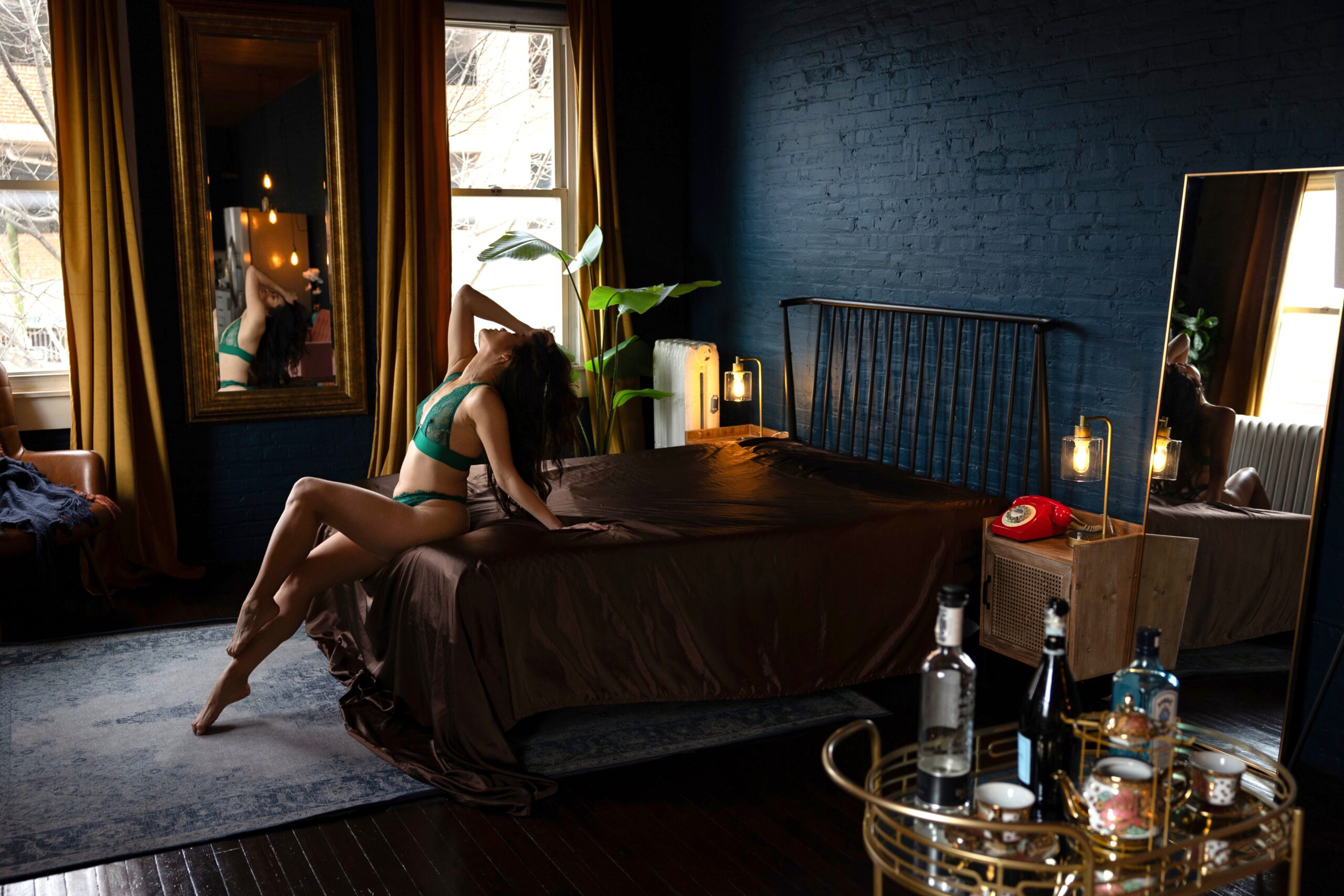
Recently, Griffin started a session with a client and turned her camera around to show the back of the screen, the way she always does. “She started crying. We were three photos in, and she was amazed at how she was seeing herself differently for the very first time in her life.”
Griffin continues, “I will give up sleep, time, and money to share that moment with more clients. To me, boudoir photography is more than just making sure someone walks away with beautiful or sexy images of themselves; it's about how they see themselves. And it happens in so many ways. I’ve had a clients start shaking so hard that when I touched her shoulder to adjust her pose to clients coming in multiple times and telling me these sessions have healed over 20 years of low self-esteem and self-doubt. That keeps me energized, it keeps me inspired, and it keeps me pushing myself to bring a great experience to anyone who walks into my studio.”
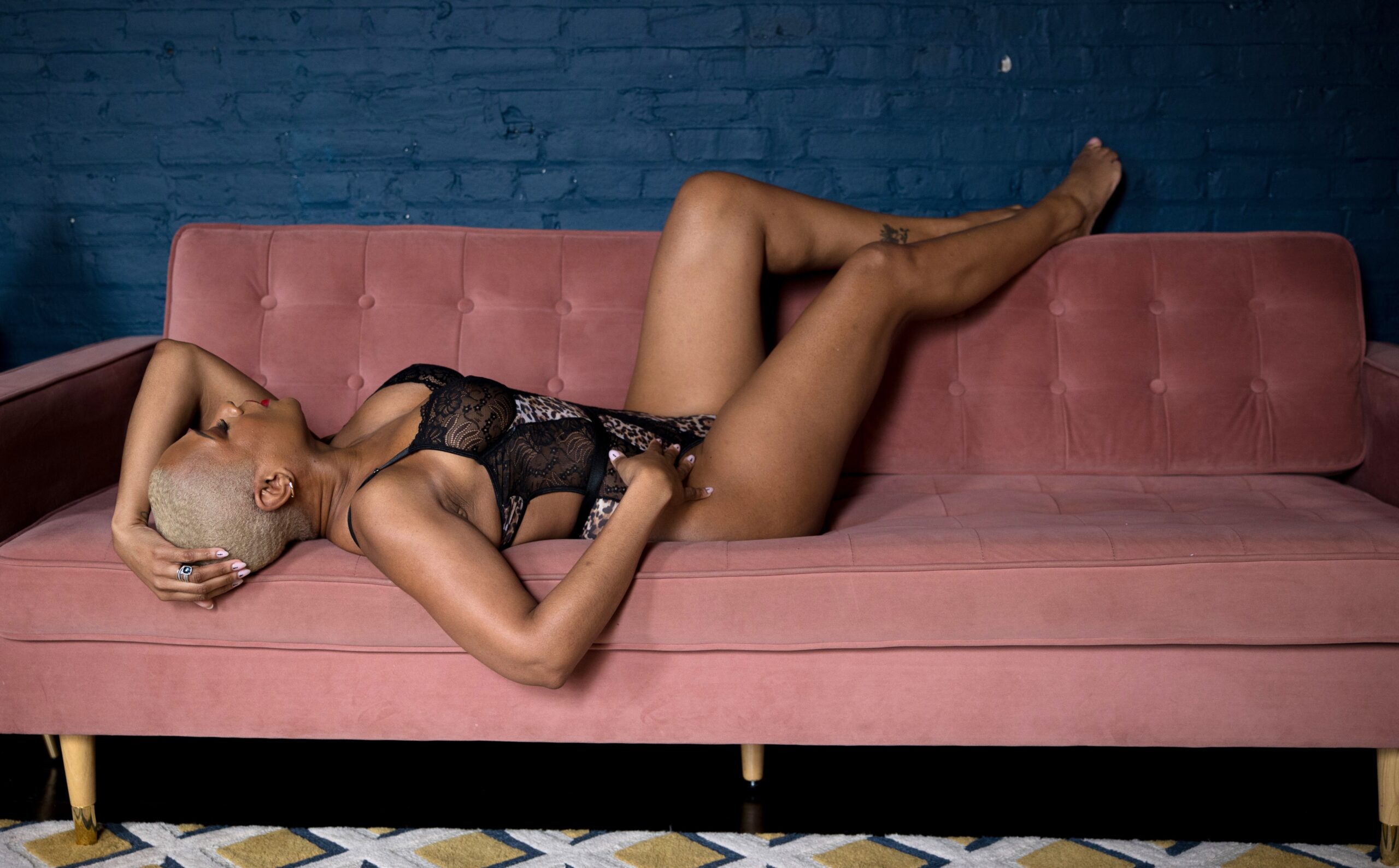
FUN FACTS ABOUT NICOLE
| Coffee or Cocktails: | Cocktails |
| Studio or Natural Light: | Natural |
| Go-To Camera: | Canon EOS R6 |
| Favorite Lens: | 24-70mm f/2L USM |
| Favorite Album Design Software: | Fundy Designer |
DREAM BOUDOIR SHOOT
| An African safari. “Imagine the landscape, the light, the raw, untouched beauty of that environment as a backdrop for a woman owning herself completely,” says Griffin. “That shoot would be unlike anything anyone has seen in this industry. We’d just have to figure out the logistics of keeping everyone safe from the wildlife first!” |
HIDDEN SKILL
| “I’ve photographed on every continent, Antarctica included. So, when I tell a client that I can find beauty anywhere, I mean that literally.” |
About the Author
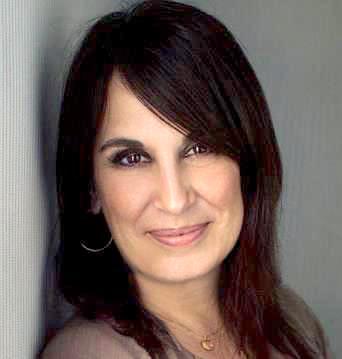
Jacqueline Tobin has worked in the photo industry for the past 37 years, kickstarting her illustrious career at the industry bible Photo District News and quickly moving up the editorial ladder there, as Associate Editor, Photo Editor, Managing Editor and, finally, Deputy Editor.
After 25 years at PDN, Jacqueline was handpicked by then publisher Lauren Wendle to take over PDN’s sister publication, Rangefinder, where she served as Editor-in-Chief for 12 years and successfully transitioned the 70-year-old print magazine in 2020 to a thriving website and digital brand. During this time, she managed to write two successful photo business books—Wedding Photography Unveiled: Inspiration and Insight From 20 Top Photographers (Amphoto, 2009) and The Luminous Portrait: Capture The Beauty of Natural Light for Glowing, Flattering Photographs (with Elizabeth Messina, Amphoto, 2012)—with the latter publishing as a second edition in Chinese.
 EN
EN  ES
ES